For companies
Hire freshers who can code.
Run your campus drive on Assessly. Every applicant takes the same proctored test, and you shortlist on scores you can trust.
From 240 applicants to 20 offers.
An example drive. Everyone who applies meets your criteria, everyone takes the same test, and you only interview the best 60. Each figure is ten students.
You set the bar. We run the rest.
Set the criteria
Applications
The test
Shortlist
Offers
You
Placement cell
Assessly
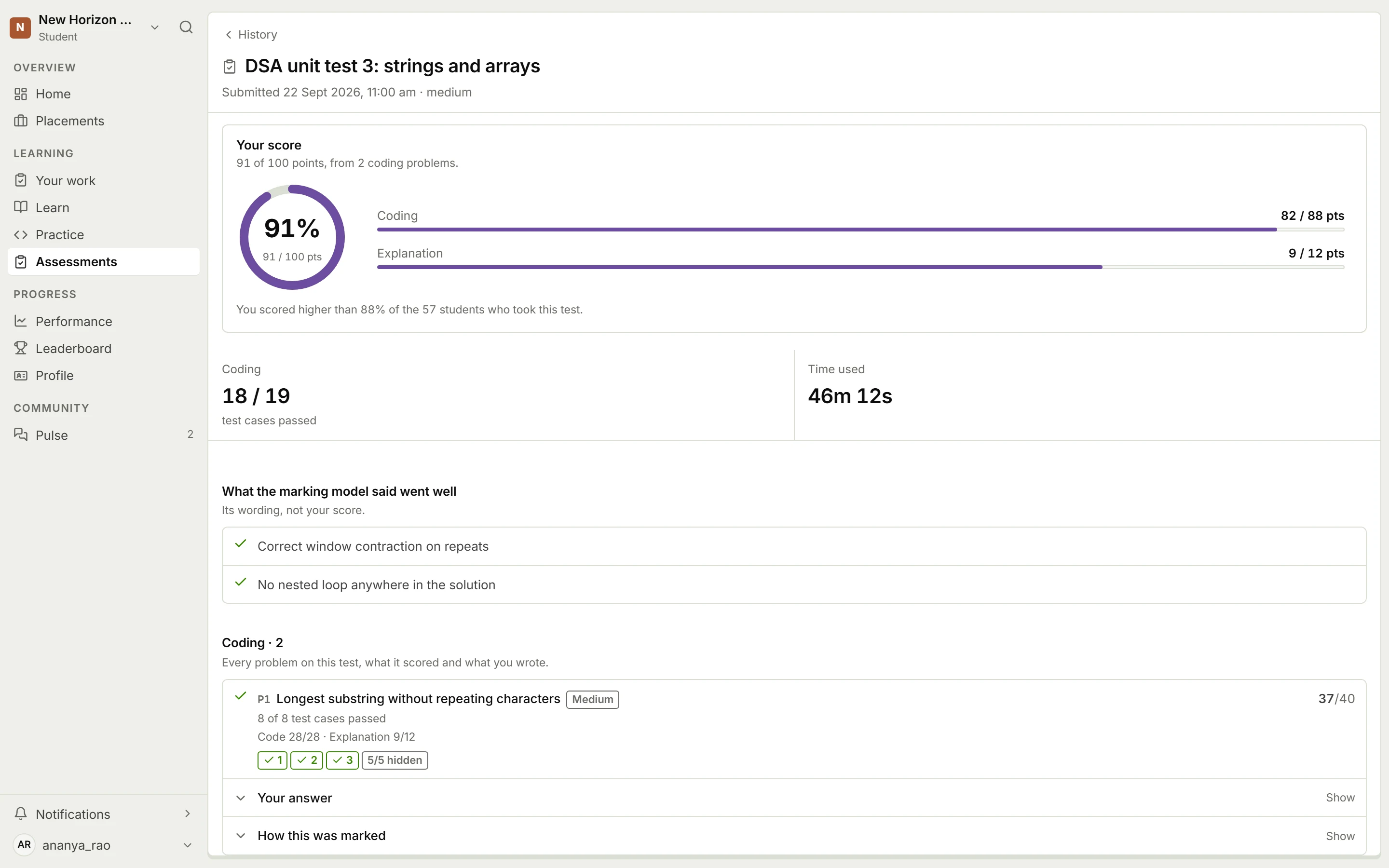
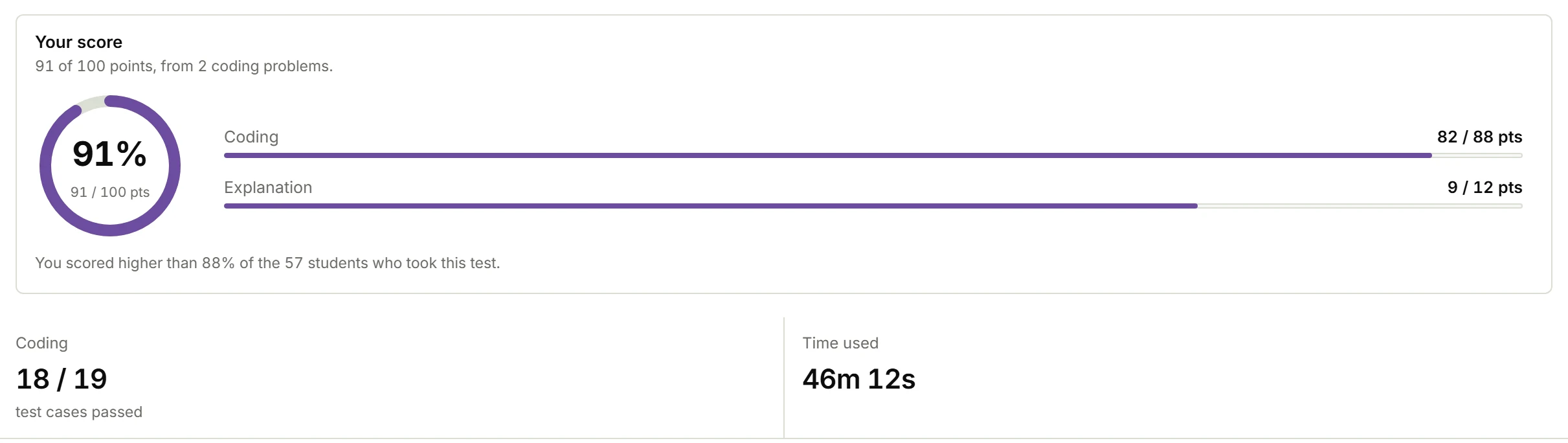
See how each candidate did.
- Score out of 100
- Hidden test cases passed
- Time taken
- Their own explanation of the code
- Any proctoring flags
Same test for everyone
One paper and one way of grading, across every college.
Hard to cheat
A locked-down desktop app with 13 anti-cheat checks.
Less admin for you
The placement cell handles the batch, the labs and the reminders.
Free to start
Your first drive costs nothing. Then pay per drive or per hire.
Questions
How do we start?
Fill in the drive form below. We reply with colleges that fit your role.
Do we need to learn new software?
No. The placement cell runs the drive on Assessly. You set the criteria, see the shortlist and meet the students.
Can the test follow our own pattern?
Yes. Tell us your pattern and we set the paper with you.
Is the test proctored?
Yes. It runs on the Assessly desktop app with an ID check and the anti-cheat checks you choose. Faculty review every flag.
What does it cost?
Your first campus drive is free. After that, pay per drive or per hire.
Your first drive is free
Plan a campus drive.
Tell us the role. Then pick a time for a 20-minute call, and we'll bring colleges that fit.
Not hiring yet? See the shortlist report you'd get after a drive: scores, hidden tests passed, time taken and anti-cheat flags for each candidate.